 Field Guide
Water does not always announce itself with a burst pipe and a flooded living room. The most expensive leaks are the ones you cannot see. A weeping supply line behind a bathroom vanity, a monsoon roof leak trickling down a wall cavity, or a slow drip under a kitchen island will destroy building materials long before water pools on the floor. When dealing with hidden water damage, Payson AZ homeowners often find the problem weeks or months after the actual leak begins.
Payson sits at 4,900 feet on the edge of the Mogollon Rim. We see hard freezes, heavy monsoon rains, and massive temperature swings. Cabin architecture and log homes hold moisture differently than conventional stucco builds down in the Valley. By the time you notice a stain on the ceiling or a warped floorboard, the water has already saturated the structural framing.
Why Rim Country Homes Are Vulnerable To Hidden Leaks
The climate and construction styles in Rim Country create specific risks for trapped moisture. Freezing temperatures in winter cause poorly insulated pipes to expand and crack. When the weather warms up, the ice thaws and the crack releases a slow, steady drip inside the wall.
During monsoon season, high winds push water under shingles and around flashing. Roof leaks rarely drop straight down. The water runs along trusses and top plates, finding the path of least resistance before pooling inside an interior wall.
Second homes sit empty for weeks or months. A supply line failure that would be caught in ten minutes in a primary residence can run uninterrupted for forty days in a vacant cabin. This turns a minor cleanup into a major structural tear-out.
Signs Of Hidden Water Damage In Your Home
Catching a leak early saves thousands of dollars in demolition and mold remediation. You rely on your eyes, ears, and nose to spot the early indicators.
Musty Odors That Do Not Go Away
You will usually smell a hidden leak before you see it. Mold and mildew need 24 to 48 hours to begin growing on wet drywall, wood framing, or insulation. As the colony feeds on the wet building materials, it releases microbial volatile organic compounds. This creates a heavy, earthy, musty odor. If a room smells damp even after you open the windows and run the HVAC system, you have trapped moisture.
Changes In Your Flooring
Water travels to the lowest point. A leak behind a wall will eventually pool on the subfloor and soak into your finished flooring from the bottom up. Wood floors will begin to cup, meaning the edges of the planks raise higher than the centers. Laminate flooring will bubble or feel squishy underfoot as the fiberboard core swells. Tile grout may darken or flake away. The tiles themselves can sound hollow or pop loose when you walk on them.
Blistering Paint And Discolored Drywall
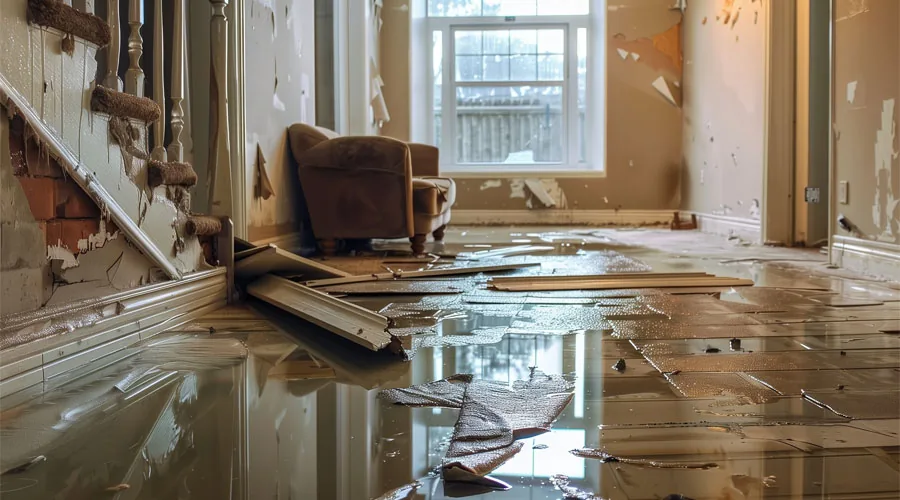
Drywall acts like a sponge. When water damage behind walls reaches the backside of the drywall, the paper facing pulls the moisture through to the painted surface. Look for yellow, brown, or copper-colored stains spreading across ceilings or down walls. Paint will bubble, blister, or peel as the moisture breaks the adhesive bond. Baseboards may swell, separate from the wall, or show dark spotting along the caulking line.
Unexplained Spikes In The Water Bill
Your water meter tracks every drop. If your usage spikes but your habits have not changed, water is escaping somewhere. Turn off every fixture and appliance in the house, then go look at the water meter. If the leak indicator dial is spinning, you have an active leak in the supply plumbing.
The True Cost Of Water Damage Behind Walls
Leaving wet materials inside a wall cavity guarantees secondary damage. The temperature inside a Payson wall cavity during the summer or while the heater runs in winter creates an ideal incubator for destruction.
Structural rot. Wood framing loses its load-bearing capacity when it stays wet. Subfloors delaminate and rot. Fixing the plumbing leak costs a few hundred dollars. Replacing rotted floor joists and wall studs requires opening up the house, bringing in engineers, and reframing the structure.
Mold proliferation. Spores spread quickly in stagnant, damp, dark environments. A minor pipe weep can generate a massive mold colony inside a wall. Remediating that mold requires full containment, negative air pressure, and professional HEPA vacuuming.
Electrical hazards. Water tracking along electrical wires corrodes connections and risks shorts. Wet insulation packed around wiring creates an immediate fire hazard.
How Professionals Find Hidden Moisture
You do not need to smash holes in your drywall to find a leak. Professional restoration contractors use specialized tools to map the water without causing unnecessary damage.
Thermal imaging cameras. Water cools the surfaces it touches through evaporation. Thermal cameras read temperature differences across walls and ceilings. This highlights cold spots that indicate trapped moisture behind the paint.
Moisture meters. We use both pin and pinless moisture meters. Pinless meters scan through drywall and flooring to read moisture levels without leaving marks. Pin meters push into the material to measure the exact moisture content of baseboards, drywall, and framing lumber.
Hygrometers. Measuring the relative humidity and temperature of the air inside a room tells us if moisture is actively evaporating from hidden sources.
The Professional Drying Process
Once the leak is identified and stopped, the drying process begins. Simply pointing a box fan at a wet wall will not work. Professional mitigation requires specific steps to pull moisture out of the cavity.
First, we remove materials that cannot be saved. Saturated drywall, wet fiberglass insulation, and ruined carpet pads must be cut out and discarded. This opens the wall cavity and exposes the wet framing.
Next, we deploy commercial air movers to force high-velocity air across the wet structural materials. This accelerates evaporation. We pair the air movers with low-grain refrigerant dehumidifiers. The dehumidifiers pull the evaporated moisture out of the air and pump it down a drain. We monitor the moisture content of the wood daily until it reaches the dry standard for Rim Country.
Documenting The Damage For Insurance
Standard homeowners policies draw a hard line between sudden leaks and gradual leaks. A pipe that bursts overnight is sudden and usually covered. A pinhole leak that sprays inside a wall for six months is gradual and almost always excluded.
How you document the damage influences the adjuster's decision. Take photos and videos immediately. Capture the standing water, the ruined materials, and the source of the leak before any cleanup begins. Keep the failed plumbing part if a plumber replaces it. Write down the exact date and time you discovered the damage. Provide this documentation to your restoration contractor so they can build a clear, defensible scope of work for the insurance carrier.
Frequently Asked Questions
Fix Hidden Water Damage With A Licensed Payson General Contractor
Mitigating the water is only the first step. You still need to rebuild the walls, replace the flooring, and match the paint. Hiring a mitigation-only franchise leaves you managing multiple contractors to put your house back together.
Ekwall Restoration is a licensed Arizona General Contractor serving Payson, Star Valley, Pine, Strawberry, and Rim Country. We handle the entire process under one roof. Our crews find the leak, dry the structure, remediate the mold, and handle the complete rebuild. You get one point of contact, one schedule, and one warranty.
Call Ekwall Restoration today at (928) 533-1060 to schedule an inspection. We will find the water and fix your home.
Written By
Shane Ekwall
Owner of Ekwall Restoration and a licensed Arizona general contractor, AZ ROC 358457, with more than twenty-five years restoring homes across Payson and Rim Country.