
 Field Guide
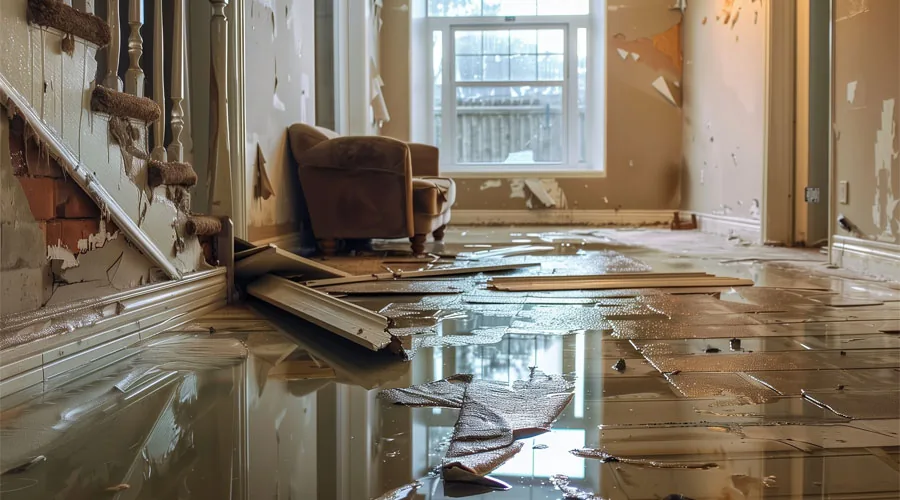
Winter in Payson brings a specific threat to residential plumbing. When temperatures drop below freezing along the Mogollon Rim, water inside uninsulated supply lines turns to ice. Handling burst pipe water damage requires immediate action. Waiting even 12 hours turns a simple extraction job into heavy structural demolition.
When the ice inside a pipe thaws, full city water pressure floods the wall cavity. A standard residential supply line can pump hundreds of gallons of water into your home in a matter of hours. This guide explains how to stop the flooding, how professionals dry the structure, how insurance handles the claim, and how to put your property back together.
The Physics of a Frozen Pipe
Many people think the expanding ice directly splits the copper or PEX where the freeze occurs. The reality is different. When a pipe freezes, the ice expands and completely blocks the line. This creates trapped water between the ice plug and a closed faucet.
As the ice continues to grow along the length of the pipe, it pushes against that trapped water. Water does not compress. The pressure builds exponentially until the pipe fails, usually splitting lengthwise. The actual leak starts when the ambient temperature rises. The ice plug melts, allowing full water flow out of the rupture and into your wall cavity, ceiling, or crawlspace.
Stopping Burst Pipe Water Damage in the First 60 Minutes
Your actions in the first hour dictate the total cost and severity of the loss. Take these specific steps the moment you discover a broken pipe.
Locate and close the main shutoff valve. Every homeowner should know where this is before winter starts. It is usually located where the water main enters the house or out at the street meter. Turn it clockwise until it stops. This kills the water supply to the entire home and stops the active leak.
Kill the electrical power. Water and electricity are a fatal combination. If water is running near wall outlets, light fixtures, or the breaker panel, shut off the main breaker immediately. Do not step into standing water to reach the electrical panel.
Document the scene. Insurance adjusters need proof. Take clear, wide-angle photos and videos of the standing water, the damaged belongings, and the source of the leak before you move anything. Log the exact time you discovered the damage.
Move high-value items. Get furniture, area rugs, and electronics out of the water path. Put aluminum foil squares or plastic blocks under the legs of heavy wood furniture. This prevents the wood stain from bleeding into wet carpets and causing permanent stains.
Why Pressurized Leaks Destroy Homes Quickly
A standard half-inch supply line under normal residential pressure pushes up to 12 gallons of water per minute into a home. That equals over 700 gallons an hour. A pipe that bursts at two in the morning can easily dump 3,000 gallons of water into a house before anyone wakes up.
Water travels the path of least resistance. It pools behind baseboards, saturates drywall, wicks up into wall insulation, and flows down into crawlspaces or subfloors.
In Payson's cabin-style homes or properties with vaulted ceilings, a broken pipe in the attic is devastating. Drywall absorbs water rapidly. Once saturated, drywall loses all structural integrity and will collapse onto the floor below under its own weight, bringing wet insulation and ceiling fixtures down with it.
Emergency Water Extraction and the Drying Process
Shop vacuums and open windows will not dry a saturated wall cavity. Moisture trapped behind vapor barriers or under flooring feeds mold growth within 48 to 72 hours. To save the structure, you need professional intervention.
Professional emergency water extraction removes the bulk of the standing water. We use weighted extraction tools to compress carpets and pull water up from the underlying pad. We use industrial wet vacuums and squeegee wands on hard surfaces. Removing water physically is always faster than trying to evaporate it.
Next comes structural drying. This requires applied psychrometry. When water enters a structure, it seeks equilibrium. A wet subfloor will transfer moisture into a dry baseboard. The baseboard transfers moisture into the drywall. To stop this migration, professionals alter the indoor environment.
We place low-grain refrigerant (LGR) dehumidifiers to drop the relative humidity in the room to single digits. This creates a thirsty environment. The dry air pulls the moisture out of the wet structural materials. High-velocity air movers disrupt the boundary layer of cool, wet air that sits directly above saturated materials. This speeds up the evaporation rate.
We monitor the environment daily. We use penetrating moisture meters, non-destructive surface meters, and thermal imaging cameras to track the drying progress inside the walls. We do not turn off the equipment until the framing, drywall, and subfloors return to their normal dry standard.
Burst Pipe Repair and the Complete Rebuild
Once the structure is completely dry, the property must be put back together. The burst pipe repair is just the beginning. A licensed plumber must cut out the split section of the line and solder in new copper or crimp in new PEX.
After the plumbing is secure, the structural rebuild begins. This often involves replacing saturated wall insulation, hanging new drywall, matching the existing wall texture, painting the room, installing new baseboards, and laying new flooring.
Most restoration companies only handle mitigation. They extract the water, tear out the wet materials, place fans, and leave. You are left acting as your own project manager. You have to find a separate plumber, a drywall contractor, a painter, and a flooring installer, while trying to coordinate their schedules.
Ekwall Restoration operates differently. We are a licensed Arizona General Contractor. We handle the initial water extraction, dry the structure, coordinate the plumbing repairs, and rebuild the damaged rooms. One company handles the entire loss under one contract and one warranty.
Will Homeowners Insurance Cover Frozen Pipe Damage?
Homeowners insurance typically covers sudden and accidental water losses. A supply line that ruptures overnight perfectly fits this definition. However, policies carry specific conditions regarding freezing weather.
If you leave your Payson home for the winter, most insurance carriers require you to maintain heat in the building or completely shut off the water supply and drain the plumbing system. If a pipe freezes because you turned the heater off to save on electricity while you were out of town, the insurance adjuster will likely deny the claim based on negligence.
If the claim is approved, the policy covers the emergency mitigation, the drying equipment, the demolition of wet materials, and the structural rebuild. It usually does not cover the cost of the plumber to fix the broken piece of pipe itself. The insurance company considers the pipe failure a maintenance issue, but they cover the resulting water damage.
Adjusters look for reasons to limit a payout. Your policy requires you to take reasonable steps to protect the property from further damage after a loss occurs. If you wait a week to call a mitigation company, the adjuster may argue that the ensuing mold is a result of your failure to mitigate the loss. Calling a professional extraction company immediately fulfills your duty to protect the property.
Preventing Pipes From Freezing in Rim Country
Prevention costs far less than mitigation. Homeowners in Payson, Pine, and Strawberry must prepare for hard freezes to protect their plumbing.
- Disconnect all garden hoses. A connected hose traps water in the exterior hose bib. When that water freezes, it bursts the pipe inside the wall.
- Insulate vulnerable pipes. Wrap supply lines in unheated crawlspaces, attics, and garages with high-quality foam insulation or thermostatically controlled heat tape.
- Leave cabinet doors open. During deep freezes, open the cabinets under your sinks. This allows warm ambient air from the house to circulate around the plumbing on exterior walls.
- Let faucets drip. A slight drip relieves the pressure buildup inside the pipe. This prevents a rupture even if the line begins to freeze.
Frequently Asked Questions
24/7 Water Damage Response in Payson
When a pipe breaks, every minute you wait increases the damage to your home and the final cost of the repair. Ekwall Restoration provides emergency response across Payson, Star Valley, Pine, Strawberry, Christopher Creek, and the surrounding Rim Country.
Call Ekwall Restoration any time, day or night, at (928) 533-1060. We will dispatch an emergency mitigation crew immediately to stop the water, document the loss for your insurance carrier, and start the structural drying process.
Written By
Shane Ekwall
Owner of Ekwall Restoration and a licensed Arizona general contractor, AZ ROC 358457, with more than twenty years restoring homes across Payson and Rim Country.