- shane111
- July 28, 2026
Payson Monsoon Damage: A Complete Homeowner’s Guide
A practical 2026 guide to preparing for severe Rim Country weather, responding to water intrusion, and knowing when storm damage requires a licensed restoration contractor.
Payson monsoons can bring violent wind, sideways rain, flash flooding, hail, lightning, and falling trees within minutes. Preparing early and responding quickly can prevent a manageable leak from becoming a major structural or mold problem.
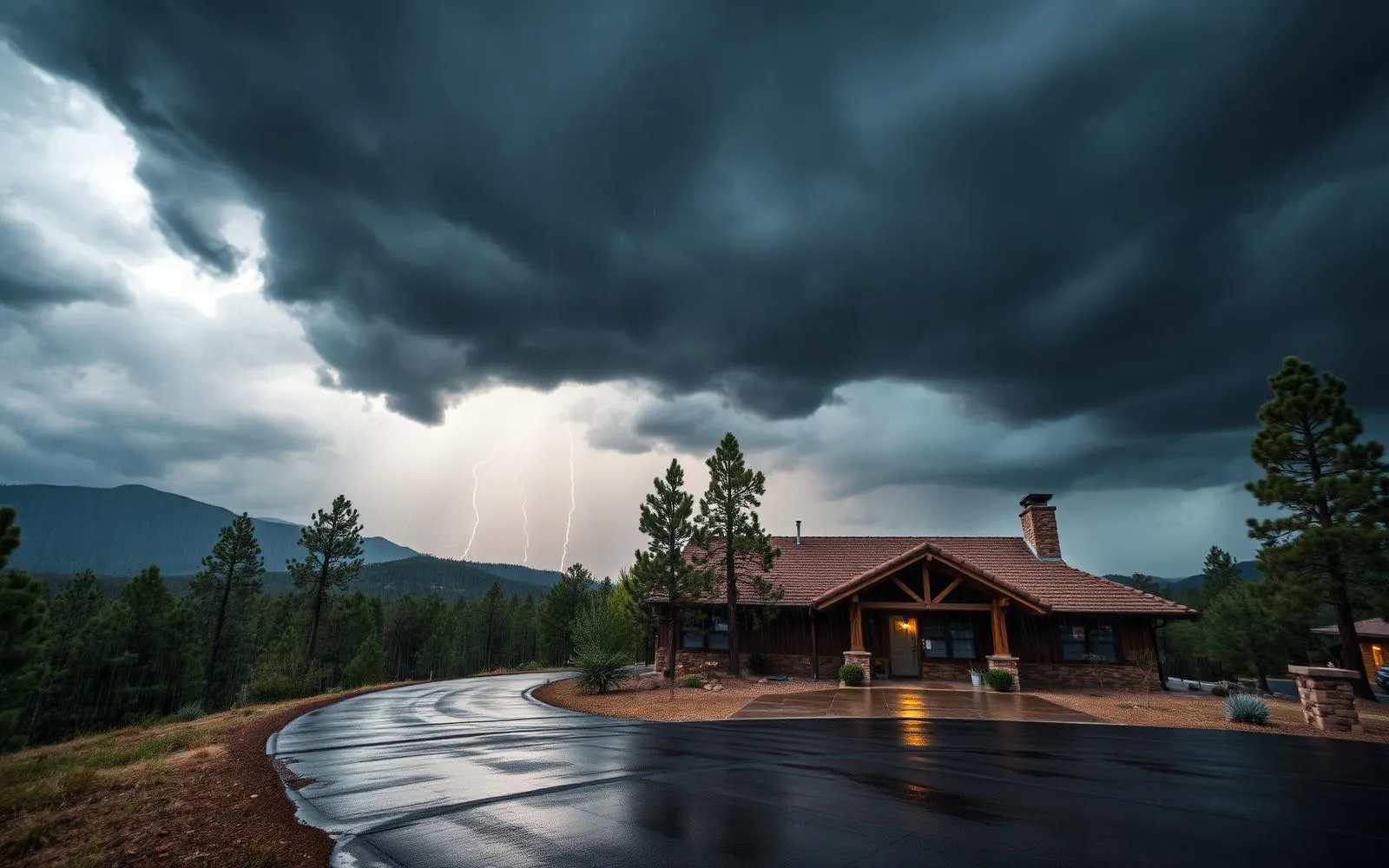
If you have lived through even one full monsoon season in Payson, you already know these storms are not the gentle summer showers people picture when they think of Arizona. They arrive suddenly, hit hard, and can turn a dry wash into a wall of moving water in minutes.
Arizona’s monsoon season officially runs from June 15 through September 30. In Payson, storm activity usually increases in late June and reaches peak intensity from mid-July through August. Roof damage, water intrusion, flash flooding, hail, and fallen trees are recurring risks throughout Rim Country.
This guide explains what monsoon storms do to Payson homes, how to prepare before the sky opens, what to do during a storm, and how to respond during the first critical 24 hours after damage occurs.
Need Immediate Storm Damage Help?
Call Ekwall Restoration at 928-533-1060 for 24/7 emergency response, roof tarping, board-up, water extraction, structural drying, and storm damage assessment. You can also request a free estimate online .
Why Payson Monsoons Are Uniquely Destructive
Monsoon damage in Rim Country looks different from storm damage in the Phoenix Valley. Payson’s elevation, terrain, forest exposure, and housing stock create a more complex risk profile.
Elevation and Terrain
Steep slopes and natural drainages concentrate runoff quickly, turning heavy rain into dangerous sheet flow and flash flooding.
Forest and Burn Scars
Debris from dead trees, wildfire burn areas, and the forest floor can clog culverts and strike homes downstream.
Older Construction
Many cabins and older homes were not built with modern drainage planes, flashing systems, and water-resistant exterior assemblies.
Wind-Driven Rain
Microburst winds can force rain beneath eaves, through vents, around windows, and into hidden wall and ceiling cavities.
Hail and Debris
Hail and flying branches can crack tiles, dent metal roofing, puncture shingles, and damage exposed building components.
What Monsoon Storms Actually Do to Your Home
Monsoon damage is rarely limited to one visible roof leak. The damage is often layered, and the moisture hidden inside walls, attics, floors, and crawlspaces can become more expensive than the obvious damage.
Roof and Attic Damage
Wind can lift shingles, crack tiles, damage flashing, tear underlayment, and drive branches into roofing materials. Even a small opening may allow water to saturate insulation and framing before a ceiling stain becomes visible.
Building Envelope Leaks
Windows, doors, siding penetrations, roof-to-wall connections, and exterior vents are common entry points for sideways rain. A small drywall stain may indicate significant moisture inside the wall.
Flash Flooding and Groundwater
Backed-up culverts, overwhelmed drainage, and runoff from surrounding slopes can force water beneath doors, through garages, and into crawlspaces or lower living areas.
Fallen Trees and Structural Impact
Saturated soil combined with high winds can bring down large pines. Tree impact may shift framing, compromise multiple roof planes, and leave the home exposed to continued rainfall.
HVAC and Utility Damage
Condensers, rooftop systems, electrical connections, and utility components may be damaged by water, hail, debris, or falling limbs. A contaminated HVAC system can then move moisture and particles throughout the home.
Your Payson Monsoon Preparation Checklist
Homes that experience the least monsoon damage are usually the homes where routine inspection, drainage work, and documentation were completed before the storm season began.
Have the Roof Inspected
Repair cracked tiles, loose flashing, worn sealant, damaged shingles, and other weaknesses before prolonged rainfall begins.
Clean Gutters and Downspouts
Remove pine needles and debris so water can move away from the roof instead of overflowing behind fascia and siding.
Correct Foundation Drainage
Confirm that soil slopes away from the home and extend downspouts at least five to six feet from the structure.
Trim Trees and Dead Limbs
Remove branches that could fall on the roof, strike windows, block access, or come into contact with power lines.
Inspect Exterior Seals
Repair cracked caulk, failed weatherstripping, and gaps around windows, doors, vents, and roof penetrations.
Test Pumps and Backups
Test sump pumps or crawlspace pumps and replace batteries in backup systems before storm activity increases.
Photograph the Property
Take current photos of every room, major belongings, the exterior, roofline, and landscaping for possible insurance documentation.
Locate Utility Shutoffs
Know where the water main, gas shutoff, and main electrical panel are located before an emergency occurs.
What to Do While the Storm Is Hitting
Once a severe monsoon is actively affecting the property, focus on personal safety and basic containment. Roof inspections, tree removal, and exterior repairs should wait until the storm has fully passed.
Stay Inside and Away From Windows
Microburst winds, hail, lightning, and flying debris can arrive without warning. Move family members and pets away from glass.
Disconnect Power From Wet Areas
If water enters a room, shut off power to that area at the breaker only when the electrical panel is safely accessible and dry.
Move Valuables Away From Water
Move electronics, furniture, documents, and personal belongings away from active leaks and off the floor when it can be done safely.
Document Active Damage
Take photos or video of leaks, standing water, hail, tree impact, and other damage when doing so does not place you at risk.
Do Not Inspect the Roof During the Storm
Wet roofing, high winds, unstable trees, and lightning create a serious fall and electrocution risk.
The First 24 Hours After Monsoon Damage
The first day often determines how extensive and expensive the restoration becomes. Water left inside walls, floors, insulation, or crawlspaces can quickly become a mold and structural drying problem.
Prioritize Safety and Containment
- Confirm that the storm has passed and watch for downed power lines, unstable trees, damaged ceilings, and structural sagging.
- Cover open roof areas with a tarp only when it can be done safely. Otherwise, call for emergency tarping or board-up.
- Shut off water to areas affected by active plumbing leaks.
- Photograph and record the damage before moving belongings or beginning cleanup.
Begin Extraction, Drying, and Claim Documentation
- Remove standing water as quickly as possible without entering an electrically or structurally unsafe area.
- Begin air movement with fans only when there are no electrical, structural, sewage, or contamination hazards.
- Contact your insurance carrier and ask what photos, reports, and documentation are required.
- Call a professional when drywall, flooring, insulation, crawlspaces, cabinets, or hidden cavities cannot be dried within 24 to 48 hours.
Mold Does Not Wait
Under monsoon-season humidity, active mold growth can begin within 24 to 48 hours after porous materials become wet. Once growth starts, the project may require containment, material removal, air cleaning, and professional remediation in addition to water damage restoration.
When Storm Damage Requires a Professional
A small exterior leak that is caught and dried quickly may be manageable. The following conditions should be evaluated by a qualified restoration contractor.
Water has reached drywall, insulation, flooring, subflooring, cabinets, or an interior wall cavity.
Standing water is present inside the home, garage, basement, or crawlspace.
A roof breach, fallen tree, damaged window, or other opening has exposed the interior to weather.
Sewage backup or contaminated floodwater has entered the structure.
Musty odors, discoloration, or suspected mold appear after water intrusion.
HVAC equipment or ductwork has taken on water or been exposed to storm contamination.
The loss will be submitted to insurance and requires moisture readings, photographs, and a professional scope of work.
How Ekwall Handles Monsoon Emergencies in Payson and Rim Country
Ekwall Restoration is locally owned and based in Payson. Because Shane Ekwall has been a licensed general contractor since 2002, one team can manage both water mitigation and the structural repairs that frequently follow major storm damage.
This integrated approach helps avoid delays between emergency drying and the rebuild phase. Learn more about Ekwall’s complete restoration capabilities and damage restoration services .
Emergency Dispatch
Ekwall responds to active water intrusion and structural emergencies during nights, weekends, and severe monsoon events.
Property Securing
Emergency tarping, board-up, and temporary protection help stop continued rain entry and reduce additional property damage.
Water Extraction and Structural Drying
Commercial extraction and drying equipment is used alongside moisture mapping to locate and address wet materials and hidden cavities.
Mold Evaluation When Needed
When conditions warrant further investigation, the process may include a certified mold inspection and independent laboratory air sampling.
Insurance Documentation
Photos, measurements, moisture readings, affected materials, and the recommended scope are documented for the property owner and adjuster.
Structural Repairs and Rebuild
Framing, drywall, flooring, cabinetry, finishes, and related repairs can be completed under the same licensed general contractor.
Common Monsoon Damage and Insurance Considerations
Coverage depends on the policy, cause of loss, exclusions, and maintenance history. The table below provides a general starting point for discussing the damage with your insurance agent.
| Damage Type | Common Coverage Consideration | Recommended Documentation |
|---|---|---|
| Wind or Hail Damage | Often included in standard homeowners coverage, subject to the deductible, exclusions, and roof condition. | Exterior photos, damaged materials, storm date, repair estimates, and inspection findings. |
| Interior Water From a Roof Breach | May be covered when the opening was caused by a covered wind, hail, or impact event. | Roof damage photos, interior moisture readings, affected materials, and emergency mitigation records. |
| Groundwater or Flash Flooding | Standard homeowners policies generally exclude floodwater entering at ground level unless separate flood coverage applies. | Water entry path, exterior drainage conditions, water depth, contamination level, and flood policy information. |
| Tree Impact | Coverage may apply to resulting structural and interior damage, depending on the cause and policy terms. | Tree location, impact area, roof and framing damage, emergency removal, tarping, and repair scope. |
| Mold After Water Intrusion | Mold coverage may be limited and may depend on whether mitigation began promptly after a covered water loss. | Date of loss, drying records, moisture measurements, photographs, inspection findings, and remediation scope. |
Fast response protects more than drywall and flooring. It protects the documentation, timeline, and evidence needed to show your insurer what happened and what was necessary to prevent additional damage.
— Ekwall Restoration
Frequently Asked Questions About Arizona Monsoon Damage
Does homeowners insurance cover monsoon storm damage?
Wind, hail, and roof damage caused by a storm are commonly addressed under standard homeowners policies. Interior water damage caused by a covered roof breach may also be covered. Groundwater and flash flooding usually require separate flood coverage. Policy language varies, so confirm the details with your insurance agent.
How quickly can mold begin after water damage?
Under warm, humid monsoon conditions, mold growth may begin within 24 to 48 hours when drywall, insulation, wood, carpet, or other porous materials remain wet. Fast extraction and professional drying reduce that risk.
Can I stay in my home during storm damage cleanup?
Many homeowners can remain in the property when damage is limited to one contained area. Temporary relocation may be recommended when structural stability, electrical hazards, sewage, extensive mold, or HVAC contamination creates an unsafe environment.
Should I file an insurance claim for minor water intrusion?
Speak with your insurance agent before opening a claim. A small, quickly dried leak may be manageable without one. Damage involving drywall, insulation, flooring, structural materials, or possible mold often benefits from professional documentation and a formal claim.
Can household fans dry water inside walls and floors?
Household fans may help with a very small surface leak, but they do not confirm whether moisture remains inside insulation, subfloors, cabinets, or wall cavities. Professional drying uses moisture readings, controlled air movement, and dehumidification to verify progress.
How quickly can Ekwall respond to a Payson monsoon emergency?
Ekwall provides 24/7 emergency response during monsoon season. During major storm events, active water intrusion, unsafe roof openings, and structural emergencies receive priority. Call 928-533-1060 to request dispatch.
24/7 Monsoon Storm Damage Response in Payson
Ekwall Restoration provides emergency tarping, board-up, water extraction, structural drying, mold evaluation, insurance documentation, and full structural repairs throughout Payson, Star Valley, Pine, Strawberry, Christopher Creek, and Rim Country.
Written by the Ekwall Restoration team. Ekwall is locally owned in Payson, Arizona, and provides 24/7 emergency water, mold, fire, and storm damage restoration throughout Rim Country.
Shane Ekwall has been a licensed general contractor since 2002, allowing the company to manage both emergency mitigation and complete structural rebuilds. Call 928-533-1060 or contact Ekwall online .
